Georgia's richest man said to be moving funds to avoid US sanctions

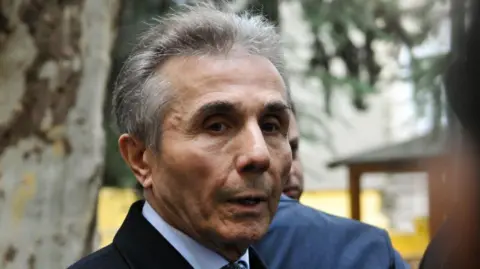
Georgia's wealthiest individual, Bidzina Ivanishvili, is reportedly taking steps to move his assets in an effort to avoid U.S. sanctions. These sanctions, announced in late 2024, aim to freeze Ivanishvili's assets due to his influence in Georgian politics. Ivanishvili, with an estimated wealth of $4.9 billion, amassed his fortune in Russia during the 1990s through ventures in computing, metals, and banking. Much of his wealth is believed to be held in offshore accounts.
The controversy surrounding Ivanishvili intensified last year when Georgia's parliament rushed through amendments to the country’s tax code. These changes, which allowed tax-free transfers of assets from offshore accounts to Georgia, were seen by critics, including Transparency International Georgia, as measures designed to benefit Ivanishvili.
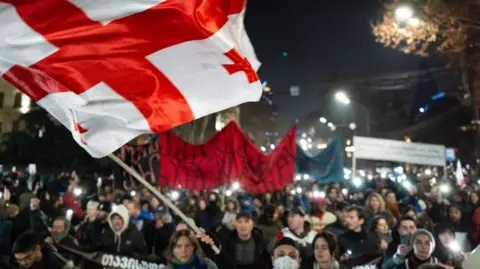
This period of tension in Georgia also saw significant protests against the ruling Georgian Dream party. Protests erupted in response to the introduction of the "foreign agents law," which was perceived as a move to curb Western influence, particularly from the U.S. Protests escalated when the government announced it would halt EU accession talks, resulting in violent crackdowns by police.
In the wake of these events, the U.S. imposed sanctions on Ivanishvili, escalating the political crisis in Georgia.

Georgia's richest man said to be moving funds to avoid US sanctions
 Getty Images
Last spring, when tens of thousands of Georgians were protesting against what they saw as a clear sign of Russian influence on the country's politics, Georgia's parliament rushed through amendments to the nation's tax code.
Transparency International (TI) Georgia, the anti-corruption watchdog, wrote at the time that the change – which allows tax-free transfer of assets from offshore accounts to Georgia – may have been introduced to serve the interests of the country's richest person and former prime minister, Bidzina Ivanishvili.
He is the founder and honorary chairman of the country's ruling party, Georgian Dream.
"Now it is clear, those changes were made for him," says senior economics analyst at TI Georgia, Beso Namchavadze.
With an estimated wealth of $4.9bn (£3.9bn), Mr Ivanishvili made his money in 1990s Russia, in computing, metals and banking. Most of his wealth is believed to be tucked away in offshore companies.
Georgia was plunged into political crisis and daily street protests last May when the country's MPs passed the contentious "transparency on foreign influence bill", often dubbed the "foreign agents law".
Under this legislation, media and non-governmental organisations that receive more than 20% of their funding from abroad have to register as "organisations acting in the interest of a foreign power", submit themselves to stringent audits, or face punitive fines. It was widely seen as a move to prevent US and other Western influence on the country.
Protests then continued when the Georgian Dream-led government won disputed parliamentary elections in October. Protests were spurred again at the start of December when it said it would be putting EU accession talks on hold.
Hundreds of peaceful protesters were arrested and severely beaten up by the police.
In response to this crackdown, the US government announced sanctions against Mr Ivanishvili at the end of last year.
 Getty Images
There is also the possibility of sanctions from the UK. Last month James MacClearly, a Liberal Democrat MP, introduced an Early Day Motion in the UK parliament calling on the government to impose sanctions on Mr Ivanishvili.
The motion expressed "deep concern at the suspension of Georgia's EU accession process and the increasing use of excessive force against peaceful protesters".
TI Georgia estimates that if the UK imposed sanctions on Mr Ivanishvili his entire business empire would be affected, because he has holding companies registered in two British Overseas Territories - British Virgin Islands and Cayman Islands.
"All his big business, which he has in Georgia, in the hospitality sector, in the energy sector, all the parent companies of these Georgian companies, the last beneficiaries are registered in these so-called offshore territories," says Beso Namchavadze.
He adds that TI Georgia believes that Mr Ivanishvili and other family members are continuing to transfer ownership of companies they previously controlled through offshore entities to newly established firms in Georgia.
Comments
Post a Comment